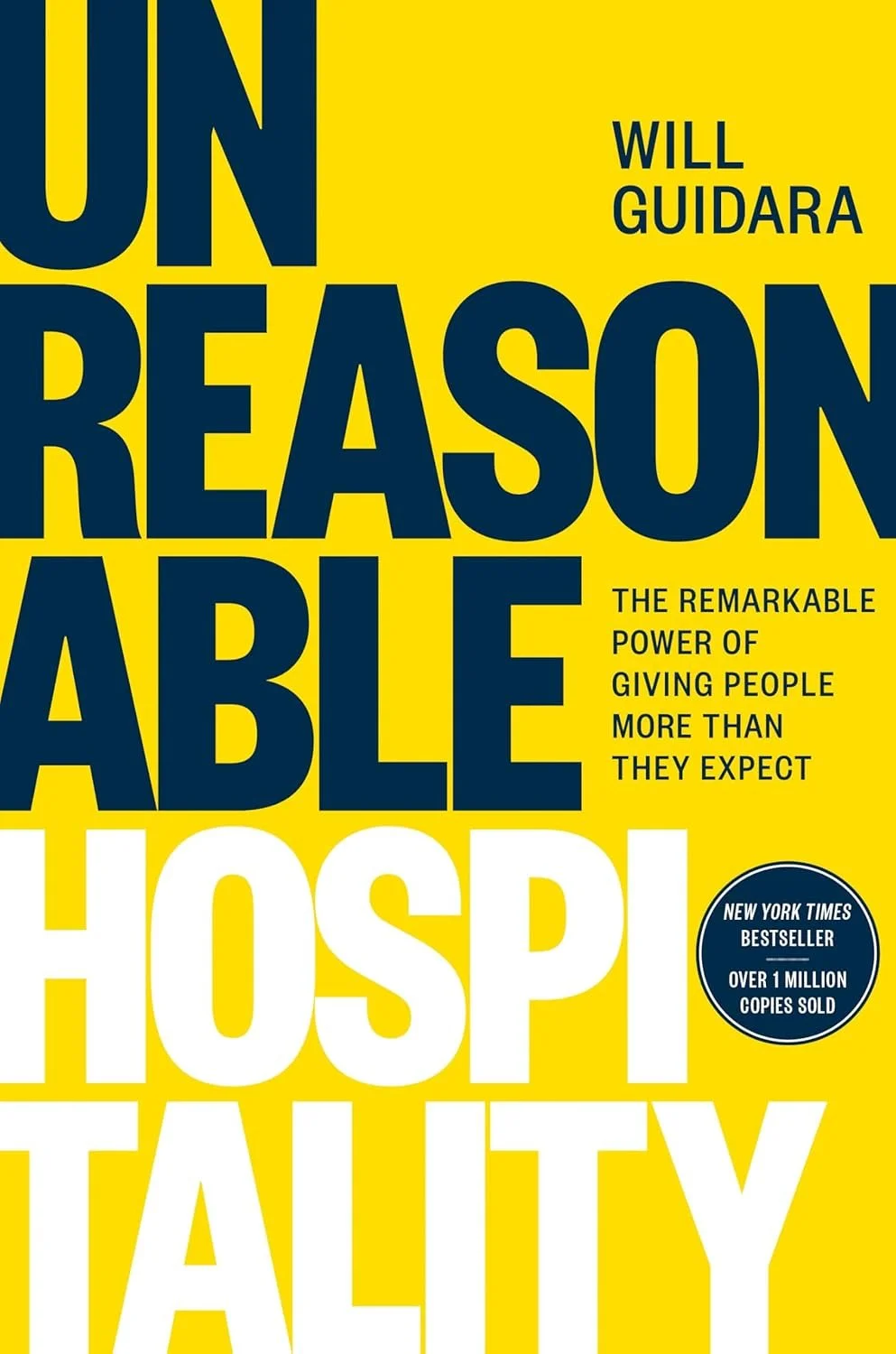
Book Review: Unreasonable Hospitality by Will Guidara
Being unreasonable is usually a bad thing, but when you want to break out of the status quo, doing something that seems unreasonable might be the catalyst that changes a culture forever. This is one takeaway I got from reading Unreasonable Hospitality by Will Guidara this summer. I was assigned this book by my general manager recently. It was nice to be able to take some time during a shift to read a book and learn about what it takes to become the highest-rated restaurant in the world.
Will Guidara was the owner and operator of Eleven Madison Park in New York when it won the best restaurant in the world award in 2017, and the road to that achievement is catalogued in this book. The writing in this book is extremely accessible and easy to read. It isn't overly technical, and it has plenty of real-world examples that illustrate deeper leadership and managerial concepts. From the balancing act between making money and being creative to how to trust others before either of you are ready, Will offers a modern approach to business philosophy where the employees are valued as much as the customers.
As part of my assignment to read this book, I was expected to speak about some takeaways from chapters 8-15. Since I'm lazy, I am going to share my notes for that assignment here:
Chapter 9: Working with purpose, on purpose
Once you’ve established a team and have alignment on your overall goals, then you have to strategize. By allowing everyone in the business to have a voice in how to best attain that goal, you create more opportunities for creative problem solving, more diversity of ideas, and more ownership. When they decided to invite everyone on staff to be a part of their strategic meeting, they had the managers serve the servers and take a back seat to allow for the non-managers to weigh in on how to best attain their shared goals.
It’s also good for people to be reacquainted with roles they oversee but haven’t done in a while or have never done.
Chapter 10: Creating a culture of collaboration
Great leaders create leaders.
Getting to know the passions and strengths of those around you allows you to put the right people in the right place. By trusting people to take over responsibilities before they might be perfectly ready for them is the only way to find out the true capabilities of those around you.
Chapter 11: Pushing Toward Excellence
Pay attention to the details. “The littlest thing matters”.
Be humble when it comes to service. Being right doesn’t always lead to connection.
Chapter 13: Leveraging Affirmation
“Don’t take credit for other people’s work.”
Chapter 15: The Best Offence is Offense
In this chapter, they created a practice of having a pretend critic table where they would practice serving a known critic. While they were determined to give everyone award-winning service every time, it is impossible not to consider the judgment of an influential critic. By practicing with this pretend critic, they were able to prepare and inoculate themselves to the stress of worrying about the real thing. Because they treated everyone more or less the same and because they trusted their team to do this, it didn’t really matter if a critic came in or what table they sat at. They were all ready to deliver the service that they could be proud of.
If you treat everyone as a potential critic, you reveal your true values.
Hospitality is about connection. When one takes the time to rethink traditions, commit to connection, and live with intention, one may seem unreasonable. Still, that very unreasonableness only indicates a world in which the opposite of these virtues is rewarded. Being unreasonably hospitable to everyone around you, especially in an ever-growing service economy, allows you to differentiate yourself, create loyalty, and have fun. Surprising someone with a personalized gift that shows you care takes attention and intention, which creates retention. I enjoyed this book, and you will too.
Buy your copy using my Affiliate link!